
 Ubud · Gianyar · Bali
Balinese Wood Carving: Authentic Craftsmanship from Bali
Explore our range of handcrafted Balinese wood carvings, available for wholesale export. Discover the artistry of Ubud's finest craftsmen, with clear MOQ and FOB terms.
What type are you sourcing?
Select your preferred type of carving and we'll guide you to the next step.
As a serious buyer in the realm of cultural and artistic exports, you understand the value of authenticity and craftsmanship. Balinese wood carving, an art form with roots tracing back to the 9th century, offers not just a product, but a cultural legacy. The villages of Mas, Ubud, and Gianyar form the heart of this tradition, each piece imbued with spiritual and symbolic meaning. Here, we guide you through the essentials of sourcing high-quality carvings for export.
Understanding the Craft of Balinese Wood Carving
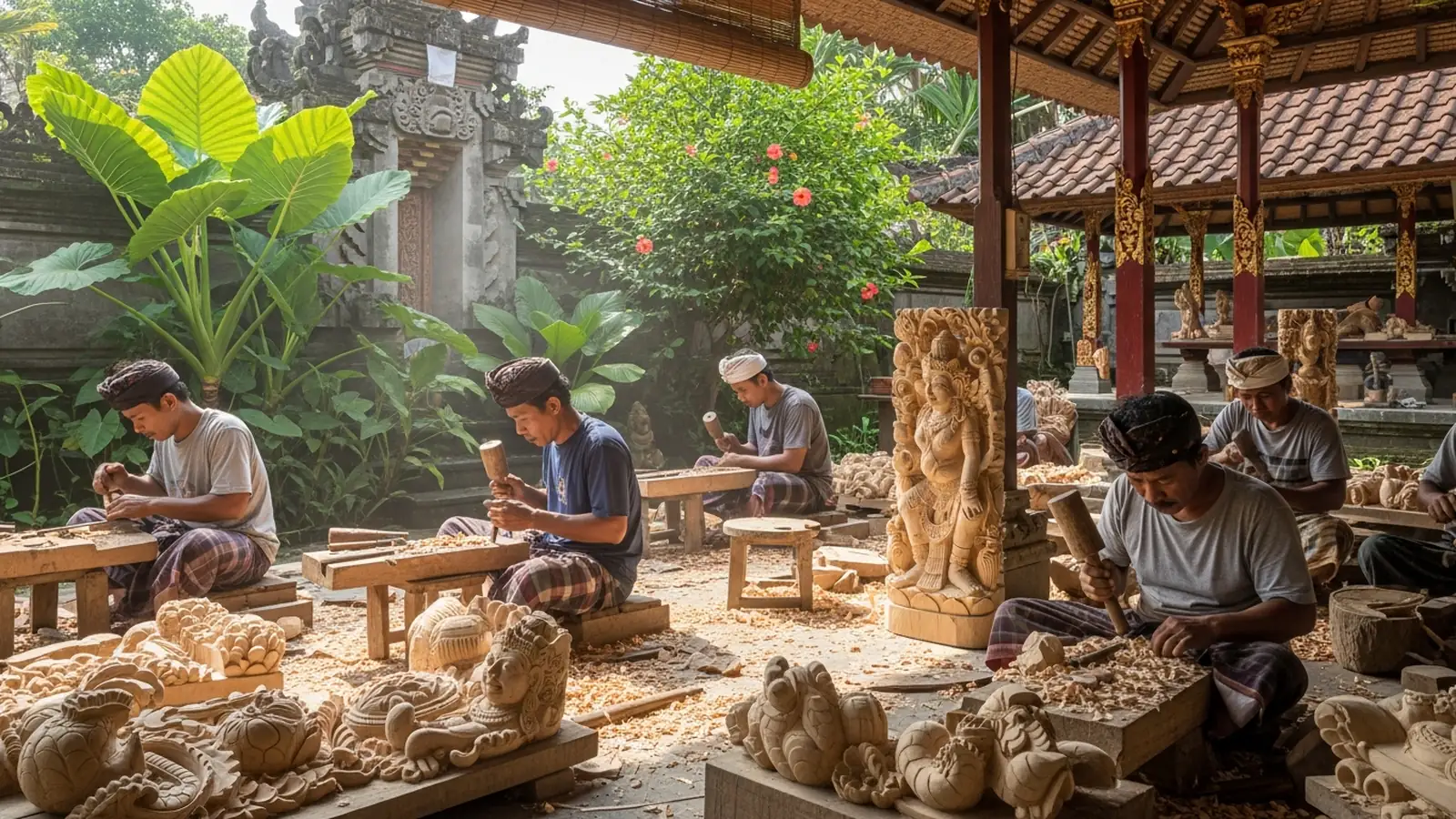
Balinese wood carving is more than a craft; it is an intricate art form steeped in tradition and spirituality. The “golden triangle” of Mas, Ubud, and Gianyar is renowned for producing some of the finest carvings. Mas Village, situated just outside Ubud in Gianyar Regency, is especially noted for its active carving community. Here, artisans work with local hardwoods such as teak, hibiscus, and “crocodile” wood, each chosen for its unique properties and suitability for specific types of carvings. The choice of wood is critical, as it influences the carving’s final appearance and durability.
The complexity of design, level of detail, and the skill of the carver all contribute to the value of a piece. Highly detailed carvings with intricate motifs, often depicting Hindu deities or Balinese mythological figures, are typically valued higher than simpler designs. For more information on the art and symbolism of Balinese carvings, visit our dedicated page.
Key Villages and Workshops
Mas Village stands out as Bali’s primary wood carving art village. Visitors can explore numerous open galleries and workshops without an entrance fee, watching artisans at work. The village is active from Monday to Saturday, with many artisans taking a rest on Sundays. Workshops often operate as family businesses, passing skills down through generations, a testament to their enduring legacy.
In addition to Mas, Ubud is another hub for wood carving, offering workshops, galleries, and market stalls with a diverse range of products from small decorative items to large sculptures. A notable workshop in Mas is Ketut Sedana’s, which has even attracted international attention from figures like U.S. Vice President Kamala Harris. These workshops often welcome visitors, providing insights into the meticulous process of carving. To plan a visit or learn more, check our visitor guides.
Materials and Techniques
The selection of wood is a critical step in the carving process, with artisans selecting species based on the intended use and desired finish of the piece. Local woods like teak and hibiscus are popular choices, each offering distinct qualities. Teak, for instance, is prized for its durability and rich grain, making it ideal for both decorative and functional items.
Techniques vary, but traditionally, carvers use simple tools to achieve remarkable detail and depth. The process is often considered a spiritual practice, with carvers historically performing rituals before felling trees. This reflects a deep respect for nature and the belief in the spiritual significance of the materials. Learn more about the specific techniques used in Balinese carving on our about page.
Market Dynamics and Pricing
The market for Balinese wood carving is robust, driven by both tourism and export demand. Prices are influenced by factors such as the complexity of design, wood type, and the carver’s reputation. High-detail pieces command higher prices, reflecting the skill and time invested. For export, buyers should be aware of potential customs regulations, including the need for phytosanitary certificates or fumigation for wooden products.
Seasonal variations in tourism can also impact pricing, with peak seasons potentially driving prices higher. It’s advisable for buyers to compare prices and quality across different galleries or workshops in Mas and Ubud. For specific enquiries or to discuss your requirements, please contact us.
Custom and Commissioned Works
Many Balinese workshops offer custom carvings on commission, catering to architectural projects or large decorative installations for hotels and villas. This flexibility allows for bespoke designs that meet specific client needs, whether for religious figures, decorative panels, or furniture elements.
Working closely with artisans, buyers can specify dimensions, motifs, and finishes, ensuring the final product aligns with their vision. The collaborative nature of these projects often results in unique pieces that capture the essence of Balinese artistry. For more on commissioning custom works, visit our guide section.
Logistics and Export Considerations
Exporting Balinese wood carvings requires careful planning to navigate customs and shipping logistics. Buyers should verify regulations in their destination country, particularly around wooden artifacts. Some workshops in Mas and Ubud offer international shipping arrangements, simplifying the process for buyers.
It’s crucial to ensure all necessary documentation, such as customs declarations and any required certificates, are in order to avoid delays. For assistance with logistics and export requirements, our team is available to provide guidance. Reach out via our contact page for support.
Preservation of Traditional Techniques
Preserving the traditional techniques of Balinese wood carving is essential for maintaining the cultural integrity and authenticity of the craft. Many artisans are committed to using age-old methods, which involve a series of meticulous steps, from the initial design phase to the final polishing. This dedication to tradition ensures that each piece is not only a work of art but also a representation of Balinese heritage.
Educational programs and workshops are being developed in collaboration with local communities and cultural organizations to teach younger generations these valuable skills. These initiatives aim to inspire a new wave of artisans who will continue to carry the torch of Balinese wood carving into the future. To learn more about these preservation efforts and how you can support them, visit our about page.
Environmental and Ethical Considerations
The sustainability of Balinese wood carving is a growing concern, with efforts being made to source wood responsibly. Many workshops are now focusing on using sustainable wood sources and implementing eco-friendly practices. This includes planting new trees to replace those used in carving and opting for materials that have a lower environmental impact.
Ethical considerations also play a role, with increased awareness of fair trade practices ensuring that artisans are compensated fairly for their work. Supporting workshops that adhere to these principles not only benefits the environment but also helps sustain the local economy and community. For more information on sustainable practices in Balinese wood carving, please visit our about page.
Promoting and Preserving Balinese Wood Carving
Efforts to promote Balinese wood carving as part of the island’s cultural heritage are ongoing, with active online campaigns using hashtags like #BaliWoodCarving and #TraditionalCrafts. These initiatives aim to raise awareness and appreciation for the craft globally.
By supporting this industry, buyers contribute to the preservation of a cultural tradition that is both an art and a spiritual practice. Engaging with the community, whether through direct purchases or commissioned works, helps sustain the livelihoods of artisans and their families. For more insights into the cultural significance of Balinese wood carving, explore our about page.
To explore our offerings or discuss your specific needs, we invite you to get in touch with our team. Let us help you bring the timeless beauty and cultural richness of Balinese wood carving to your market.